Thursday, May 3, 2012
Spanakopita (Spinach Pie)
Spanakopita is a Greek spinach pie. In this version, the papery-thin layers of phyllo pastry hold a spinach filling with leeks, scallions, dill, feta, Parmesan, and ricotta. Agapi Stassinopoulos said on The Martha Stewart Show that the inclusion of ricotta is untraditional but makes the pie sweeter. She happens to be Arianna Huffington's sister, and this is their mother's recipe.
Joe and I liked this spanakopita, but we could have done without the ricotta and amped up the feta in this dish instead. We really like feta, and I had followed the recipe and added only three-quarters of the 8-ounce block. Our other criticism was we would have preferred a shallower pie with a lower ratio of spinach to pastry, because you get a big mouthful of spinach and little phyllo by comparison. After all, there's three pounds of spinach in this dish!
Like all spanakopita dishes it takes some time to put together, and my least favorite part is squeezing the water out of fistfuls of spinach. I used thawed frozen spinach, but if you go the fresh route you'll still have to steam or saute the spinach to release the water from the leaves to avoid a soggy pie. Also, I used a decidedly non-Greek cooking vessel -- the wok. There was so much filling it would have come up to the rim of my saute pan, making it difficult to stir.
But when it's all assembled and ready to go in the oven, the house has started to warm up and you can just sit back and wait. And think back to last week when it was sunny and springlike, instead of cold and grey like today. And then dig into some good spinach pie.
Thursday, April 26, 2012
Braided Lemon Bread
This braided bread looks sophisticated, and tastes even better. The slightly sweet bread is filled with cream cheese and lemon curd, and it really brightened up our morning. Here you can see that I switched up my second loaf with raspberry jam instead. Both are good, but the lemon is where it's at.
The mock braid is easier to assemble than it looks, and I will definitely be making it again. A dusting of sanding sugar gives it nice crunch and extra sweetness, and that's what I sprinkled on the lemon loaf. It's not as pretty or dramatic as the white nonpareils here, but it's better taste- and texture-wise. (Nonpareils will melt in the oven, unlike sanding sugar, so cool the loaf completely, brush with a bit of corn syrup, and then sprinkle. I still say, go with the sanding sugar.) Update Dec. 2013: The new photo at the top uses Swedish pearl sugar, which won't melt in the oven.
Like almost all yeast bread recipes, this one takes time. But it's well worth it.
A bench scraper worked great here, creating straighter edges than a pastry wheel would. I transferred the braid to a silicone mat, but I recommend assembling and baking on parchment (I didn't have any at the time). Cutting on a silicone mat can damage it, and moving the braid can make it crooked or mess it up. For convenience, I used storebought lemon curd.
This post was shared with:
Sweet Treats Thursday
Sweets for a Saturday
The mock braid is easier to assemble than it looks, and I will definitely be making it again. A dusting of sanding sugar gives it nice crunch and extra sweetness, and that's what I sprinkled on the lemon loaf. It's not as pretty or dramatic as the white nonpareils here, but it's better taste- and texture-wise. (Nonpareils will melt in the oven, unlike sanding sugar, so cool the loaf completely, brush with a bit of corn syrup, and then sprinkle. I still say, go with the sanding sugar.) Update Dec. 2013: The new photo at the top uses Swedish pearl sugar, which won't melt in the oven.
This post was shared with:
Sweet Treats Thursday
Sweets for a Saturday
Friday, April 20, 2012
Cast Iron Skillet Pizza
Have you ever heard of making pizza in a cast iron skillet? We've owned a pizza stone for years, but when I saw this recipe I wanted to try it anyway. I wanted to see how a skillet held up to a stone, and how storebought pizza dough compares to homemade. Initially I waved away the idea of following the recipe by using storebought dough, but then I wondered what the quality of premade dough is like and if the convenience is worth it.
You can buy premade pizza dough in the refrigerated section of your supermarket's bakery. When I saw whole wheat dough along with plain, I decided to add another level to my experiment. Both pizzas are made the same way, with a quick sauce from scratch, fresh mozzarella, and crumbled Italian sausage. When they were done, I topped them with parsley and shavings of Parmesan.
My verdicts:
1) Storebought dough is not as good as homemade dough, but it's not far off, and convenience counts for a lot. Dough from scratch has to be made the night before, and there are resting periods in the refrigerator and at room temperature -- the storebought dough is ready to use when you bring it home. The flavor of storebought is close to homemade, and the texture is a little doughier than homemade but not a deal-breaker. If you want to go the from-scratch route anyway, I have only praise for Peter Reinhart's dough recipe.
2) I can't say the same for the whole wheat dough. It rolled out nice and thin and didn't have the annoying elasticity of the plain dough, but I missed that elasticity and chew when eating the whole wheat crust. It also had all the flavor of cardboard.
3) The cast iron skillet works great, producing a crust with a nicely crisped bottom. If you have only a 10-inch skillet like me, a half-pound of pizza dough will work for this recipe or one pound will make two pizzas; scale down the other ingredients slightly as well. If you're fighting kitchen clutter, you may opt for just your skillet instead of buying a pizza stone.
4) The pizza recipe is delicious as well. I like the from-scratch sauce, and the small amount guarantees you won't have a soggy crust. I like the use of fresh mozzarella, and even though it releases water after cooking the taste is superior. I left out the arugula because I'm not a fan, but the parsley and Parmesan are nice.
If you've wanted to try making your own pizza, this is the easiest I've seen yet.

Wednesday, April 11, 2012
Flour's Country Ham, Cheddar and Tomato Quiche
This quiche is good, really good. And not just for breakfast -- I'd happily have this with a salad for lunch or dinner. The crust is buttery, sandy, and crumbly, and the freshness of the tomatoes nicely contrasts with the creamy filling, even after being baked. I haven't had quiche in so long, I was imagining a big omelet in crust. But this is a smooth, savory custard. The amount of ham and cheese isn't over the top, and despite the richness of the dish it feels light on your stomach. I wanted to photograph individual slices too, but there weren't any left!
The recipe for the filling looked very rich, so I subbed the heavy cream with more half and half. Still not exactly healthy, I know, but I was afraid it might not set up if I used just milk. I also correctly guessed there would be more filling than a standard tart pan would hold, so I opted for an 8-inch springform pan instead, making it narrower but taller. If you do the same, just note that this will add 30 minutes to the cooking time.
My last few tips. If you use a springform pan, wrap the outside in foil since my second try sprung a leak despite no visible crust cracks. And like the recipe says, make your crust taller than necessary to account for some inevitable shrinkage -- mine originally came up to the rim of the pan. An industrial-sized paper coffee filter is handy for holding pie weights during blind baking. Also, save that leftover dough! Any pieces of crust that break off or holes that appear after blind baking can be patched up with dough and then baked with the filling.
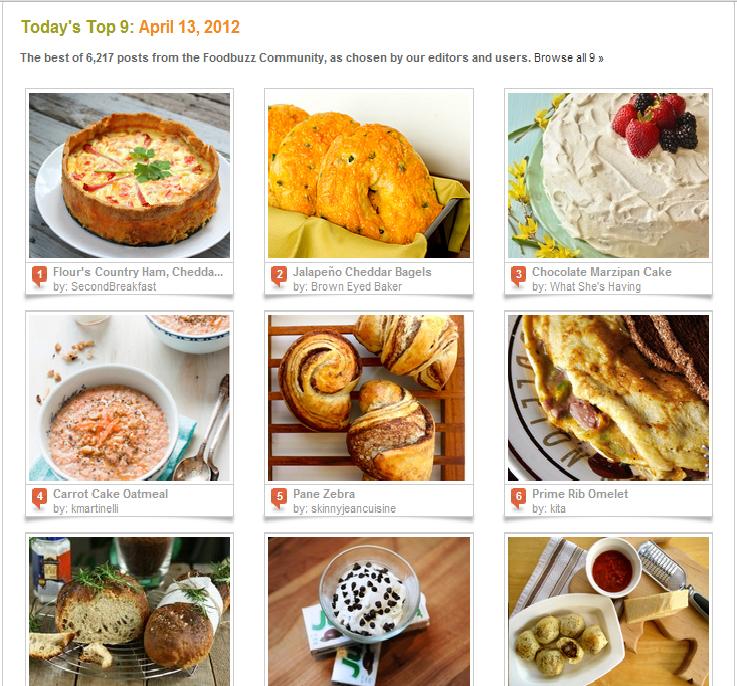
Update: This post made the daily Foodbuzz Top 9!
Thursday, April 5, 2012
Easter Chocolate-Covered Marshmallows
Have you ever had a homemade marshmallow? The first time Joe suggested we make them, I couldn't imagine their being worth the trouble. Storebought marshmallows are all right in hot cocoa or crispy rice treats, but otherwise spongey and kind of like styrofoam. Homemade marshmallows, on the other hand, have a creamy texture inside and are flavored with vanilla or whatever else you put in them.
This chocolate-drizzled chick is nesting in toasted coconut. It was a fun switch from my blog posting last year, where the marshmallows were just covered in colored sugar and sprinkles. You can also submerge the bunnies and chicks completely in chocolate. The thin layer of chocolate will crack and give way to the soft marshmallow, and the two flavors melting in your mouth are incredible. Give them some Easter flair with colorful nonpareils, or sprinkle the coconut over the chocolate for some fuzzy bunnies and chicks. Bag them up or tuck them in Easter baskets, and you'll have some happy campers.
For this look, dip a spoon in melted chocolate and let most of the excess drip off. Then wave the spoon around in zig-zags or swirls, and sprinkle with nonpareils. For the eye, dip a toothpick in the melted chocolate, then spin the toothpick to get off most of the excess. Use the toothpick to make a dot on the marshmallow, avoiding any drips. To cover the marshmallows in coconut, dip them in melted chocolate and then sprinkle with the toasted coconut flakes. Set aside to dry.

This post was shared with:
Bunny Hop Easter Link Party
Tea Party Tuesday
Sweet Treats Thursday
Sweets for a Saturday
Friday, March 30, 2012
Pineapple Buckle
This Pineapple Buckle is a yellow cake with chunks of pineapple mixed in and hints of lime zest and juice, and after some time in the oven slices of pineapple are arranged on top. Because the batter has been partially cooked, the slices won't sink in and will sit on top, pretty as a picture. That's what the recipe said, anyway. What happened is another matter.
Update: This post made the Foodbuzz Top 9!
Wednesday, March 28, 2012
Eggplant Parmesan Sandwiches
The crispy, Panko-coated eggplant slices are so good, I could eat a whole plate of just those. But it doesn't hurt to throw on some mozzarella, tomatoes, peppadews, and basil, and sandwich the whole thing in a ciabatta roll. I was telling Joe just that when he asked, sort of absent-mindedly, "Is it crispy?" I bit into one, and the loud crunch got his attention. Then he ended up pilfering some eggplant slices.
The recipe is a bit of a production, but I think you can easily streamline it without affecting the quality. Skip the whole eggplant-salting thing for starters. This is a graffiti eggplant, and it not only looks cool, but it's smaller than your typical Italian eggplant and not as bitter or full of seeds; hence, no need to salt and drain. One of these made about a quarter of the recipe, which was a perfect amount for us. And I made those oven-roasted tomatoes (they're lost between layers in the photo, in case you were wondering), and they were good but I don't think worth the trouble again. A spoon of marinara will do it for me next time.
You also don't need the whole inch of oil in the skillet, or the frying thermometer. We're not making bone-in fried chicken here, so drop a crumb of panko in the oil -- if it doesn't do much, the oil's not hot enough, and if it starts to bubble up it's hot enough. I cooked them by color rather than time, flipping and removing them when they were golden brown. I hate spongy, al dente eggplant, but these were meltingly soft. A bit of a production, yes, but also a very satisfying lunch.
This post was featured on Yummly's 10 Egg-cellent Eggplant Recipes.
I also wanted to thank Dawn at DJ's Sugar Shack for passing on to me the Versatile Blogger award and Anuja of Simple Baking for the Liebster Blog award. Since I've received the Versatile Blogger award in the past, you don't need to read all about me again or the blogs I recommend. But if you'd like to anyway, click here. And definitely visit Dawn's and Anuja's great blogs!
Subscribe to:
Posts (Atom)